
Last updated November 25, 2026
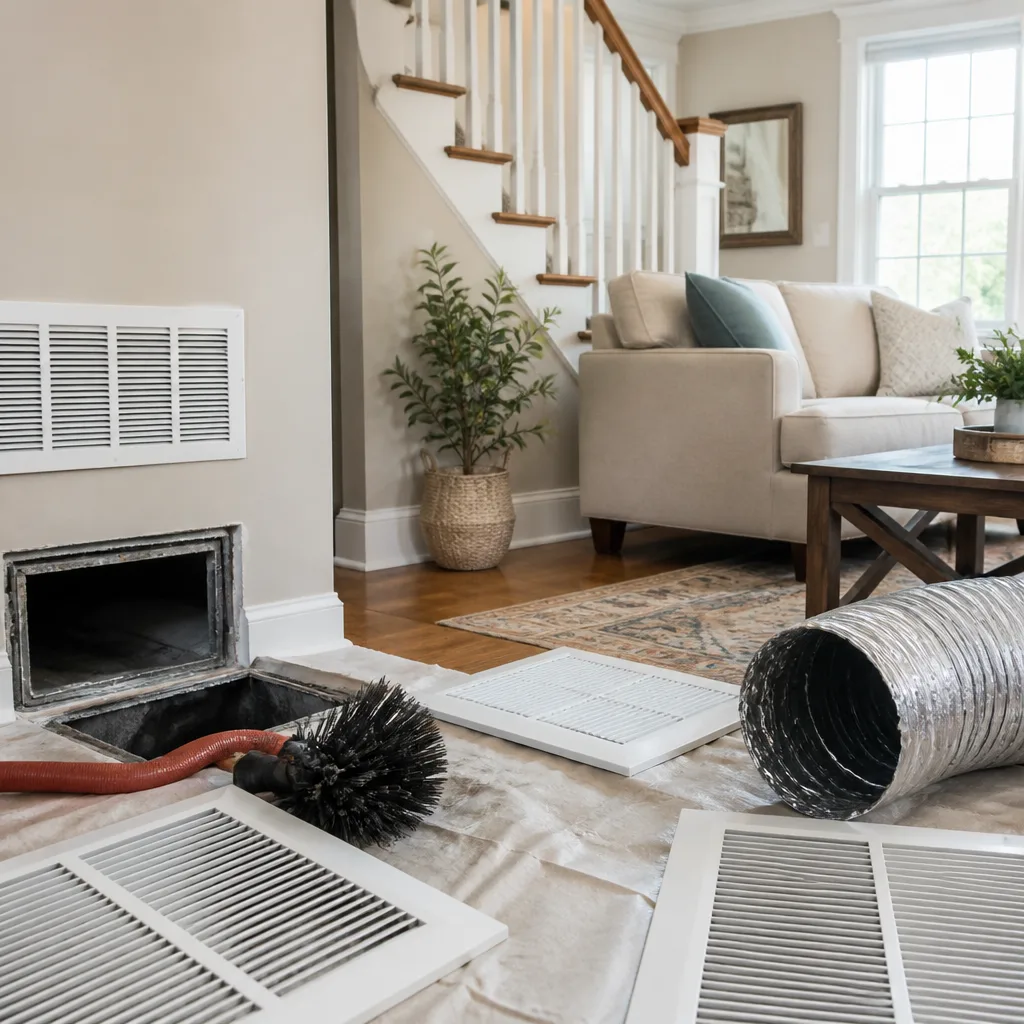 Whole-home duct cleaning
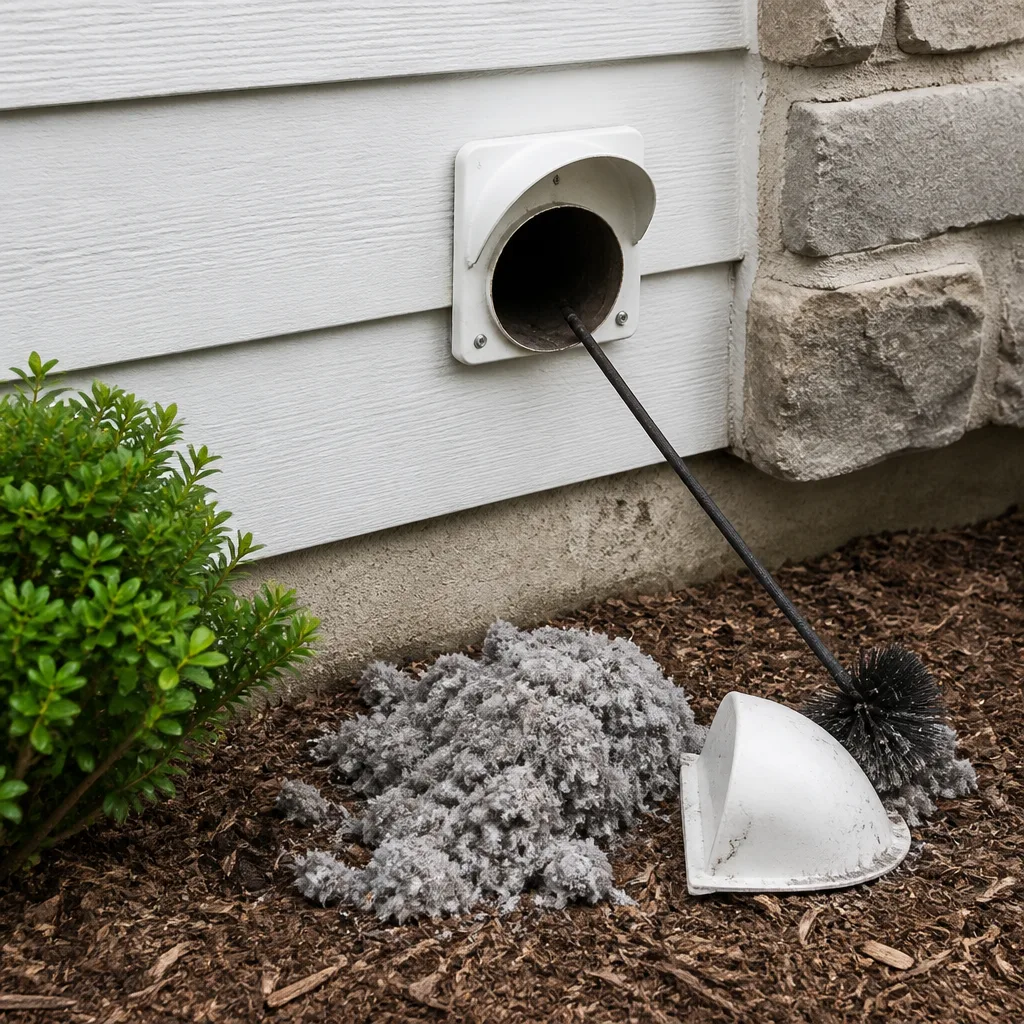 Dryer vent cleaning
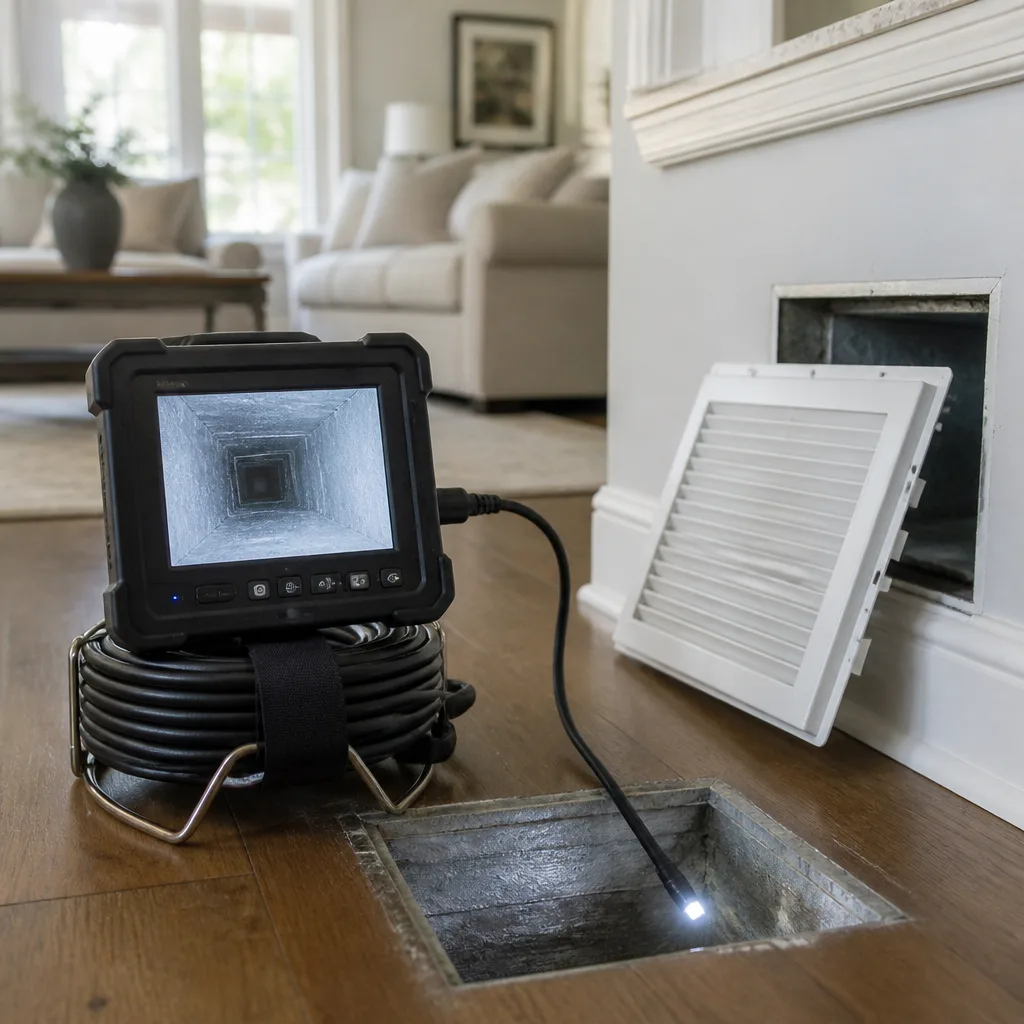 Camera inspection
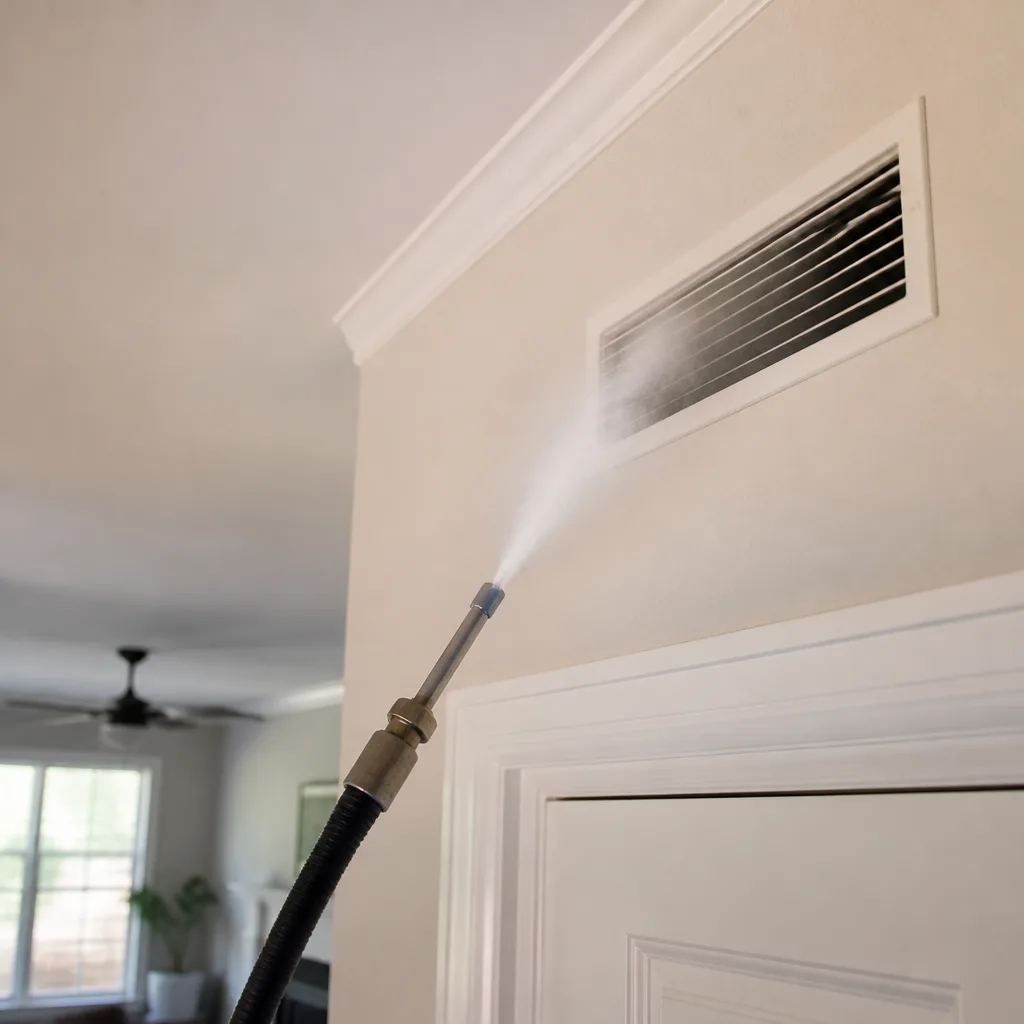 Sanitizing & deodorizing
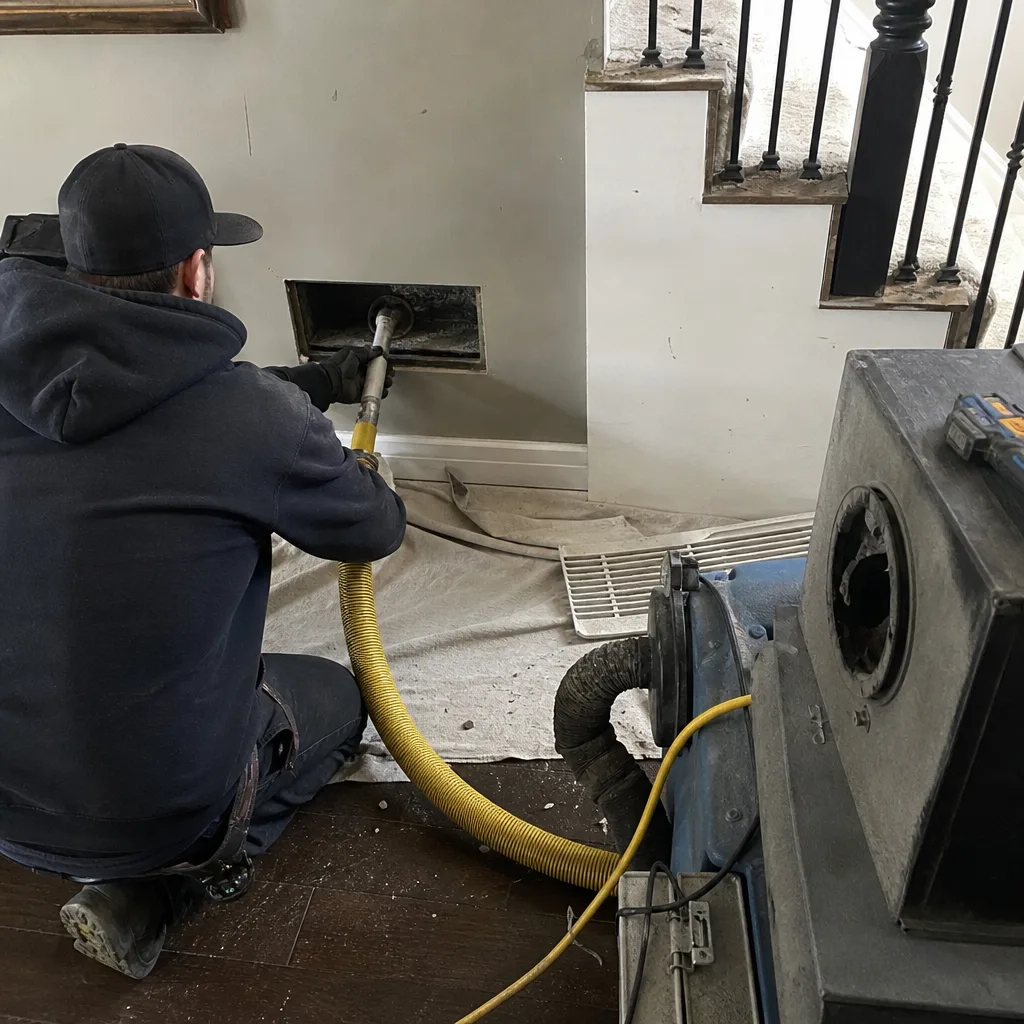
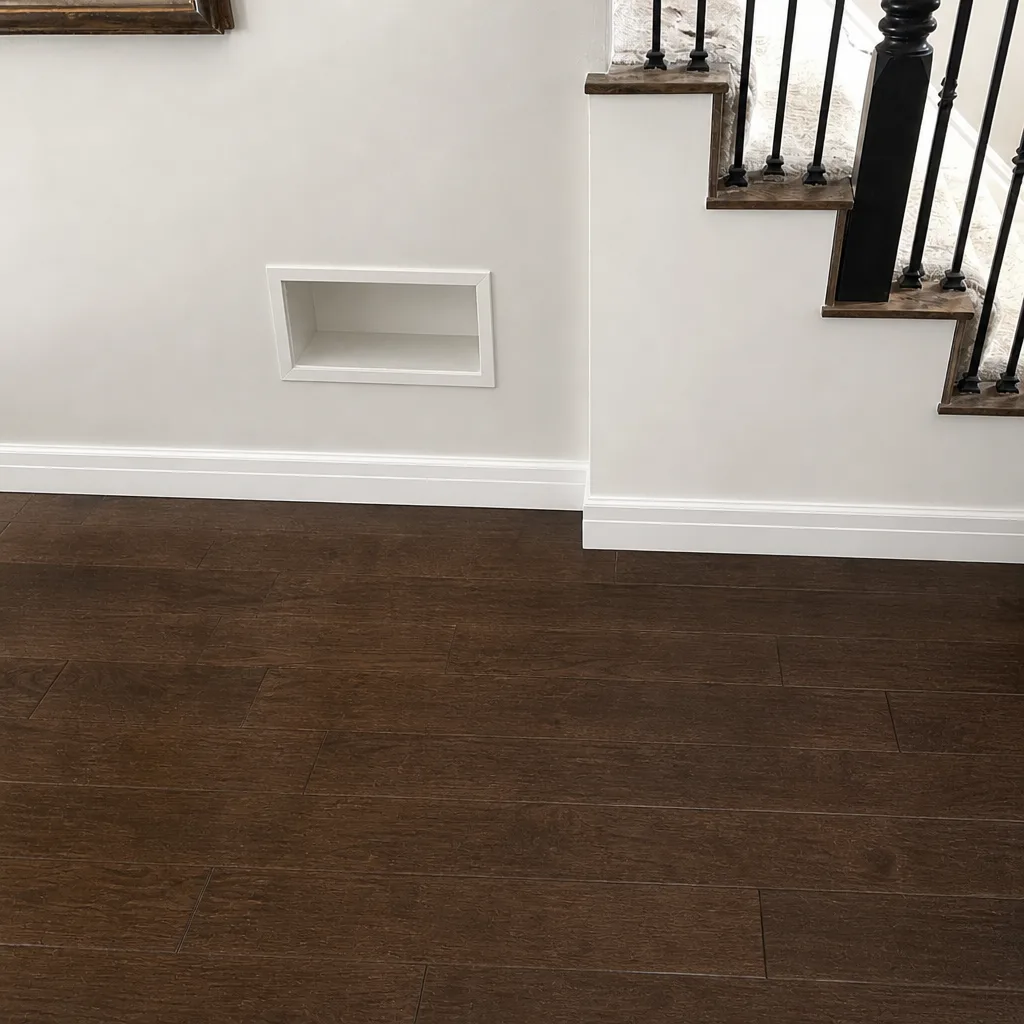
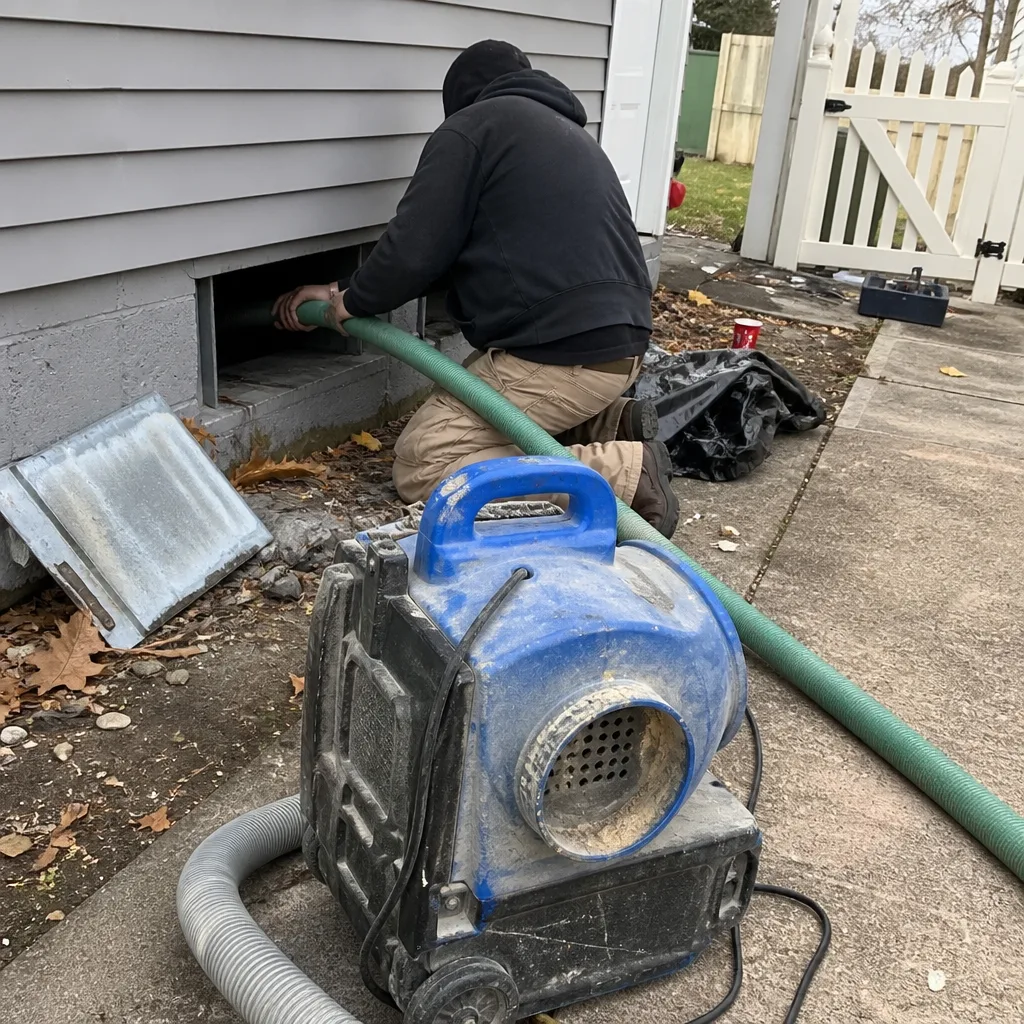
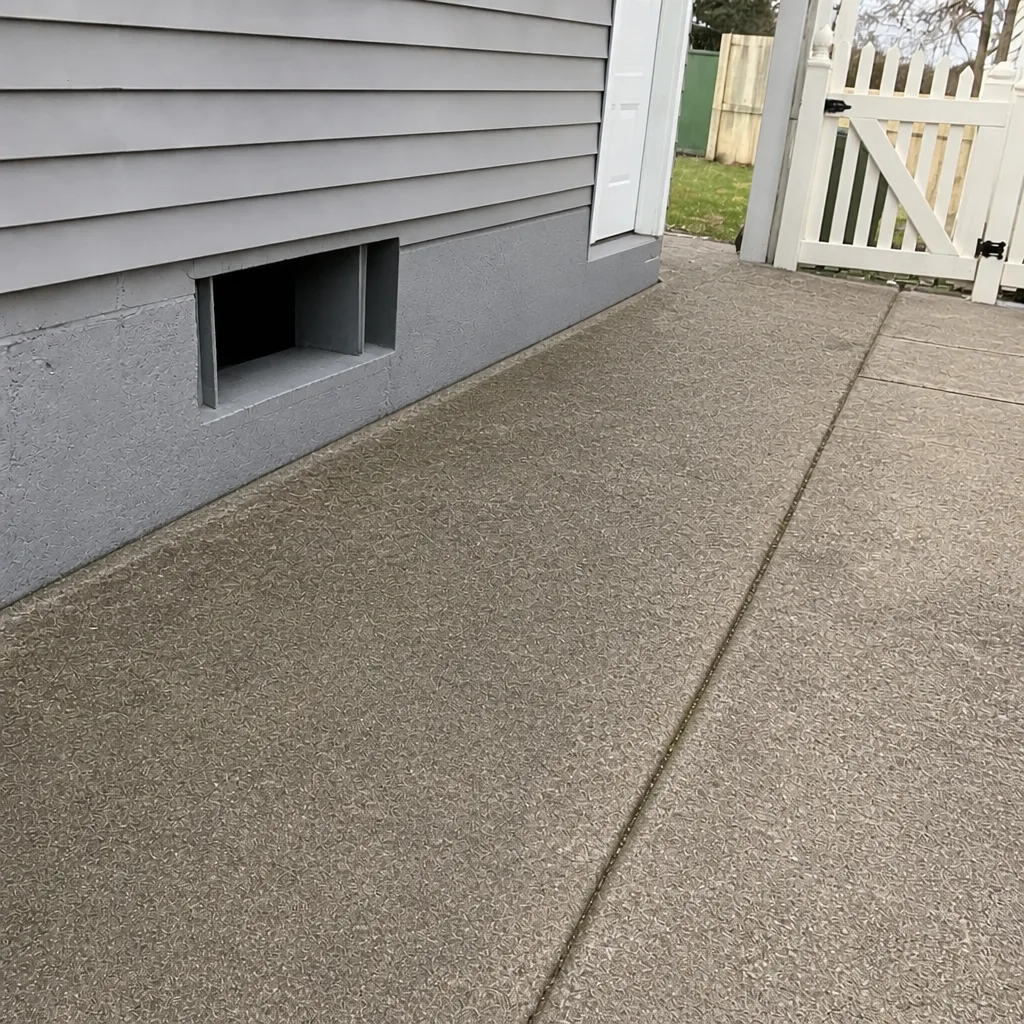
Whole-system duct and dryer vent check with before-and-after photos - you see exactly what came out of your vents
That "$99 whole-house special" is a bait ad - the real number appears once they are in your hallway, or the "clean" is a shop-vac at the register. We photograph the inside of your ducts before and after instead.
DIY vs Professional Air Duct Cleaning: The Ogden Homeowner’s Decision Guide
A shop vac pulls roughly 60 to 80 CFM of suction at the hose end. A truck-mounted duct cleaning system pulls 10,000 to 16,000 CFM at the collection point. That difference is not something a longer hose or a stronger wet/dry vac can close. It is a different category of machine altogether.
That single fact decides most of the DIY versus professional question before you ever open a register. But it does not decide all of it. There’s real work a careful Ogden homeowner can do, and there’s work where the tools in your garage make the problem measurably worse. This guide draws the line honestly, explains the physics behind that line, and gives you a four-variable framework for deciding which side of it your own house falls on.
Quick Answer
You can handle filter changes, register cleaning, lint removal at the dryer vent, and a visual check with a borescope, and those steps genuinely help. Source removal inside trunk lines and main plenums needs negative-pressure equipment that a consumer vacuum cannot produce, so professional cleaning is the only way to actually pull built-up debris out of the system rather than stir it into the air. For a typical Ogden home on a 3 to 5 year cleaning interval, the professional job usually costs less per year than renting consumer tools repeatedly and never quite getting the ducts clean.
Styles & brands we work with
- Whole-home duct cleaning
- Dryer vent cleaning
- Camera inspection
- Sanitizing & deodorizing
Table of Contents
- What Actually Happens Inside a Duct System
- What You Can Legitimately Do Yourself
- Why Consumer Suction Fails in Trunk Lines and Plenums
- When DIY Makes Things Worse
- The Honest Cost Comparison
- A Four-Variable Decision Framework
- How Often Cleaning Really Needs Doing
- How to Tell Whether the Work Was Done Right
- Common Mistakes to Avoid
- When to Call a Professional
What Actually Happens Inside a Duct System
The dust that collects in ducts is not loose powder sitting on a shelf. It’s a layered deposit. Adhesive residue from cooking, skin cells, pet dander, insulation fibers, and construction grit bind together on the sheet metal and the flex liner over time. Some of it sticks well enough that a light brush pass barely moves it.
A duct system is also shaped in ways that frustrate cleaning. There are long straight runs, tight elbows, transitions where round pipe meets rectangular plenum, takeoffs feeding individual rooms, and the boot at each register. Debris settles wherever airflow slows, which means the heaviest deposits hide in the places hardest to reach.
Ogden homes add their own wrinkles. The dry high-desert air here means more airborne dust gets drawn into return air than in a humid climate, and June through September the system runs hard for weeks at a time. Older houses around the Jefferson and East Central neighborhoods often carry original sheet metal trunks with decades of accumulation in the seams. Newer construction out toward Harrisville and West Haven leans on flex duct, which sags and collects at the low points.
Understanding the shape of the problem matters because it tells you what a real cleaning job has to do: reach the deposit, loosen it from the metal, and pull it out under control. Every decision in this guide comes back to that.
What You Can Legitimately Do Yourself
Plenty of maintenance belongs in your hands. These tasks are safe, useful, and worth doing between professional cleanings.
- Change the filter on schedule. A clogged return filter forces the blower and cuts airflow to every room. Check the filter every one to two months during heavy cooling season.
- Clean the registers and grilles. Pull each supply and return cover, wash it in warm soapy water, dry it, and reinstall. That removes the visible dust ring you see in every room.
- Clear lint from the dryer vent. Disconnect the vent from the dryer, vacuum what you can reach, and check the outside damper for lint buildup. This one matters for fire safety, not just efficiency. If the run is long or runs through a wall cavity, leave it to a professional dryer vent cleaning service.
- Inspect the filter slot and the accessible air handler cabinet. Look for streaks, rust, or gasket gaps that let unfiltered air bypass the filter. Seal small gaps with foil tape.
- Run a borescope inspection. An inexpensive USB borescope with a light will let you look inside a supply run from the register. You’ll see whether the liner is clean, coated, torn, or wet. That’s information, not cleaning, and it is genuinely useful.
Those five steps cover visible dust and airflow-blocking lint. They don’t touch the deposits in the trunk lines. If you want a visual baseline before you decide anything else, a borescope check is the cheapest honest diagnostic available to you.
Why Consumer Suction Fails in Trunk Lines and Plenums
Here is the mechanical reason, in plain terms. Professional duct cleaning works on a pressure differential. A vacuum source is connected to the main trunk or plenum, pulling the whole system into negative pressure. Then a technician uses compressed air whips and contact brushes to knock deposits loose at the far end. Because the entire duct is under negative pressure, loosened debris travels toward the collection point instead of spilling into the house. Containment equipment at the openings keeps the dust inside the work zone.
A shop vac cannot do this. It creates suction at one point, not a pressure differential across the whole system. When you push a hose down a register, you pull air locally and leave the rest of the system at neutral pressure. The debris you loosen a few feet away has nowhere to go, so it drifts into the house through the registers. You’ve redistributed the dust, not removed it.
Flow volume makes the gap worse. A consumer vac moves 60 to 80 CFM at the hose end. A Rotobrush contact-cleaning system and Nikro negative-pressure equipment operate in a different order of magnitude, in the thousands of CFM at the collection point. That’s the equipment class used on commercial and industrial duct work, and it’s what we bring into Ogden homes.
The takeaway is simple. If the goal is to lift deposits from the trunk lines and main plenums, you need a machine that can put the whole system under negative pressure and pull the loosened debris out. That’s not a longer hose. It’s the category of tool.
When DIY Makes Things Worse
Some common advice actively harms a home. Avoid these.
- Leaf blowers and shop-vac “blow mode.” Nothing on the market moves more dust into living space faster. You’ll coat walls, furniture, and the blower motor in debris, and you’ll spread whatever was in the ducts across every room.
- Compressed air on sheet metal systems. A pneumatic nozzle concentrates pressure and can bend seams, pop duct tape, or dislodge a flex liner from its collar. Once a liner separates, the run is losing air into a wall cavity.
- Stirring up mold without containment. If a borescope shows dark staining, fuzzy growth, or a musty smell that won’t clear, do not disturb it. Agitating mold without containment spreads spores through the house and into the air handler. Professional sanitizing uses containment and air filtration for exactly this reason.
- Soaking anything with water. Duct cleaning is a dry process. Moisture inside a duct feeds mold and degrades flex liner.
- Filling the filter slot with the wrong filter. A high-MERV filter on a system not designed for it chokes airflow. Match the filter to the equipment or you’ll quietly reduce performance.
If you’ve already tried one of these and the house smells or the system runs worse, that’s a signal to stop and get eyes on the ducts before you do anything else.
The Honest Cost Comparison
DIY looks cheaper until you count what you actually spend. Here’s a straight comparison, and a brief note that pricing in Ogden is set per job by a written estimate, not by a per-vent rule.
- Consumer duct-cleaning kit or shop vac attachment: modest one-time cost. Result: surface cleaning of the runs you can reach, no source removal in trunk lines, no containment.
- Rental of a stronger wet/dry vac: adds a day of your time, a truck run, and still no pressure differential across the system.
- Borescope inspection: a small one-time cost, genuinely useful, worth keeping.
- Filters and register cleaning supplies: ongoing small cost in either scenario.
- Professional full-system cleaning: priced per job by written estimate, and best amortized over a 3 to 5 year cleaning interval. Add dryer vent cleaning and the fire-safety angle comes along with it.
- Duct repair and sealing, when needed: typically the item that pays back fastest, since leaks waste conditioned air year-round.
Divide a professional job by its interval and the per-year figure is usually lower than people assume. Compare that to renting tools twice, doing a partial job, and still booking the professional because the problem persisted. Clean ducts are step one. Sealed ducts are step two, and most DIY approaches never get to step two.
For a clearer sense of what each service covers, our Ogden Air Duct Cleaning Co page lays out the full scope, including air duct cleaning and HVAC cleaning.
A Four-Variable Decision Framework
Four variables tip the decision. Be honest with yourself on each.
- Home age. Houses over roughly twenty years old, especially those built before flex duct became common, often have original trunks with seam deposits a consumer tool can’t reach. In Ogden, older stock near the downtown grid falls here. A professional first cleaning on a house like this is usually the right call.
- Duct material. Rigid sheet metal can tolerate contact cleaning and brush passes. Flex duct is fragile and can sag, tear, or trap debris at low points. If the borescope shows liner damage, that’s a professional assessment.
- Contamination type. Ordinary dust is low-risk. Mold, water damage, pest droppings, or heavy construction debris call for containment, filtration, and sanitizing, all professional territory.
- Health sensitivities. If anyone in the home has asthma, allergies, or a newborn, source removal matters more, and the airborne dust stirred by DIY cleaning matters more. For these households, professional cleaning with containment is the safer route.
Score yourself: if you land on two or more of these variables, professional cleaning is the sound choice. If you land on none of them and only want to keep visible dust down, your DIY maintenance list is enough for now.
How Often Cleaning Really Needs Doing
Most homes do fine on a 3 to 5 year interval. That range isn’t a rule handed down from anywhere; it reflects how quickly deposits build to the point where they affect airflow and air quality. Several conditions pull the interval shorter.
- Pets that shed heavily indoors
- Recent remodeling, especially drywall sanding
- Smoking indoors
- A return system near a dusty or windy exterior
- Prior pest activity in the ductwork
- Systems that run hard all summer, which is most of Ogden between June and September
If any of those apply, a borescope check will tell you more than the calendar. If the metal is coated but not filled, you can wait. If seams and elbows are packed, don’t wait. We install and recommend Aprilaire and Honeywell air-quality products after cleaning, because once the system is clean, better filtration and humidity control help keep it that way.
How to Tell Whether the Work Was Done Right
Bait-and-switch is the real reason homeowners hesitate, and it’s a fair hesitation. A low teaser price that balloons once the technician is on site is a pattern this industry earned. Our answer is one flat price per system, agreed before work starts, no per-vent pricing, and before-and-after photos of your own ducts. Here’s how to judge any company, including us.
- Ask for before-and-after photos of your actual system, not a stock image.
- Ask what containment equipment they use. If the answer is vague, ask again. We use Abatement Technologies containment, the same class used in professional remediation. That’s a clinical standard of cleanliness, not a marketing line.
- Watch for full negative-pressure setup. If the vacuum isn’t pulling the system under negative pressure, source removal isn’t happening.
- Confirm the quote is one flat price per system, in writing, before anyone starts.
- Ask whether they also offer duct repair and sealing, because cleaning without sealing leaves leaks that reintroduce contamination.
If a company can’t answer those questions clearly, that’s your answer.
Common Mistakes to Avoid
- Assuming you’ve cleaned the system because you cleaned the registers. The registers are the last few inches of a run that can extend forty feet back.
- Using a leaf blower to “flush out” the ducts. It coats the house and the air handler in debris, and it can damage flex liner.
- Running a high-MERV filter in a system not built for it. Read the equipment spec before you upgrade.
- Skipping the dryer vent because it seems unrelated. Dryer vent blockages are a leading cause of house fires, and that service deserves the same seriousness as full HVAC cleaning.
- Ignoring a musty smell. In a dry Ogden summer, a persistent musty odor usually means moisture somewhere in the system, and that needs professional attention before it spreads.
- Hiring on a teaser coupon price without a written flat price for your system.
- Cleaning but never sealing. Leaks waste energy all year and re-contaminate the ducts faster than a clean system should get dirty.
When to Call a Professional
Call when the borescope shows heavy deposits in the trunk lines, when you see mold or water staining, when there’s a musty smell that won’t clear, when pest evidence turns up, when anyone in the home is sensitive to indoor air, or when the dryer vent is long or hard to reach. Call too if your energy bills have climbed and the system runs unevenly, because leaky or packed ducts are a likely cause.
Ogden Air Duct Cleaning Co offers free estimates in Ogden. Call (855) 658-5291. We answer 24/7, with fast dispatch from 7am to 7pm, Sunday through Friday. Our technicians have up to 14 years of experience, and we bring the Rotobrush and Nikro equipment class to your home, not a shop vac with a longer hose.
See the difference
 Before
 After
 Before
 After
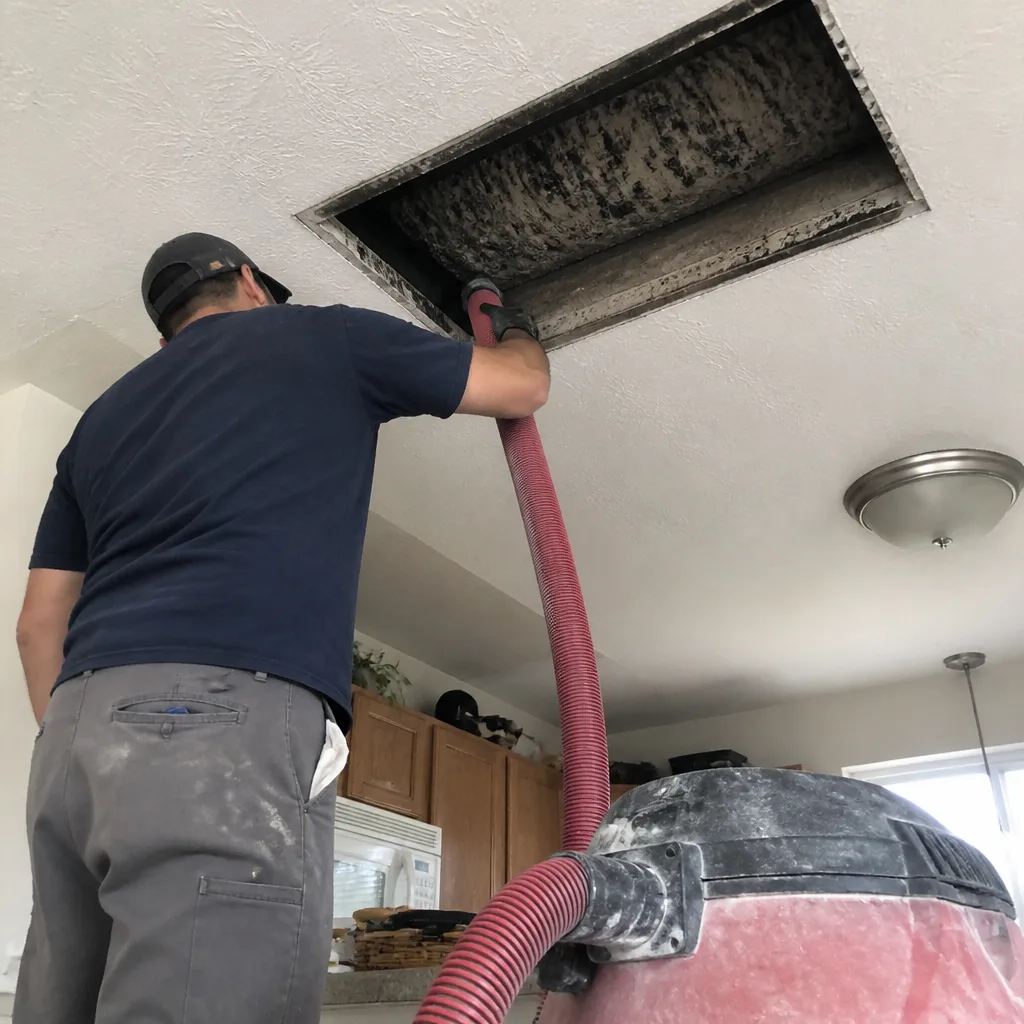 Before
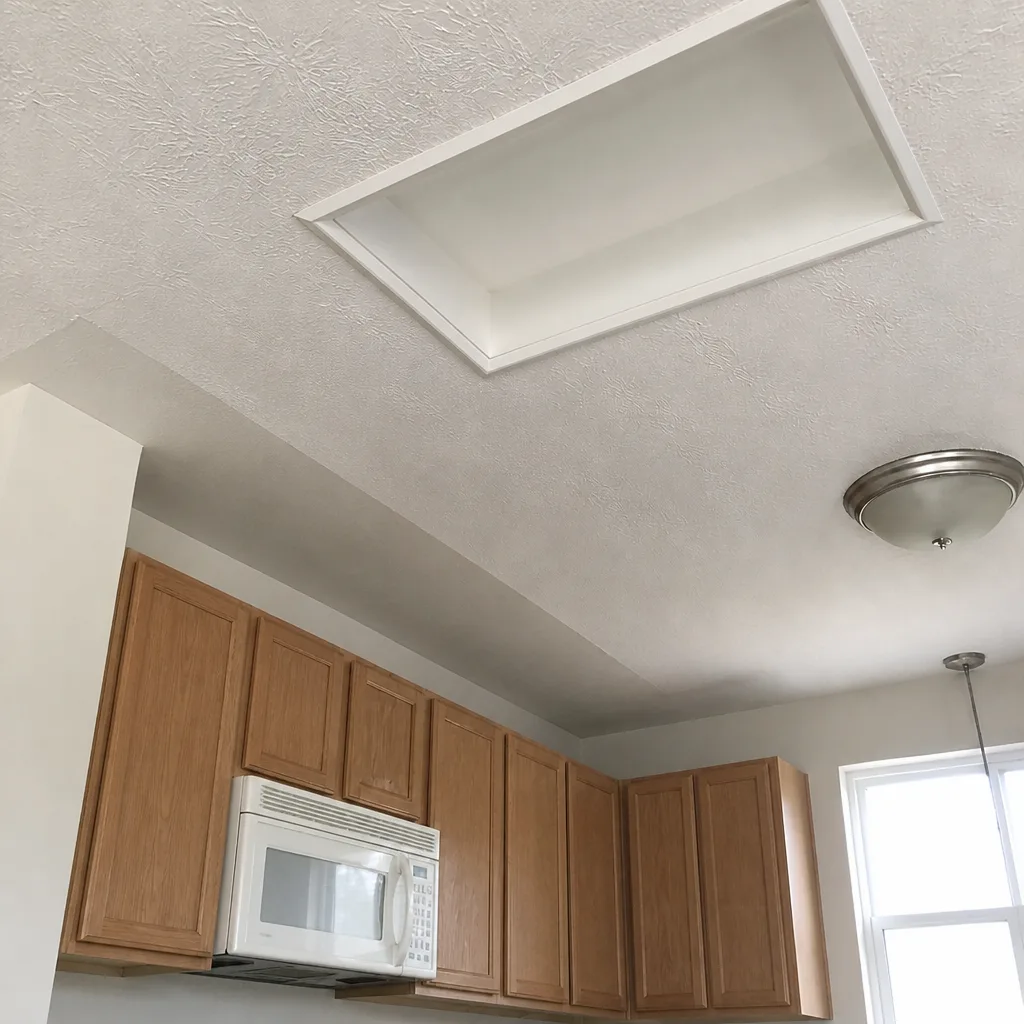 After
Frequently Asked Questions
You can clean registers and reach the first foot or two of a run, but you can’t achieve source removal in trunk lines or plenums. A shop vac pulls 60 to 80 CFM locally, while professional negative-pressure equipment creates a system-wide pressure differential that pulls debris out under control. For a full-system clean, you need the professional tool class. Call (855) 658-5291 for a free estimate.
Pricing is set per job by a written estimate, because system size, duct material, contamination level, and whether repair and sealing are needed all move the number. We don’t quote per vent, and we don’t use teaser coupon pricing. One flat price per system, agreed before work starts. Call (855) 658-5291 and we’ll give you an exact quote, free.
Often because they cover less. A low price may mean surface cleaning of accessible runs only, no negative-pressure equipment, no containment, and no repair or sealing step. Those missing pieces are the ones that make a cleaning actually hold. Ask what’s included and what equipment is used before you compare numbers.
Ask for before-and-after photos of your own system, and ask what containment and negative-pressure equipment is used. If a company can’t provide those, move on. We photograph your ducts before and after, and we use Abatement Technologies containment equipment so the clean is verifiable, not just claimed.
Most homes do fine on a 3 to 5 year interval. Pet hair, recent remodeling, indoor smoking, and heavy summer cooling load can shorten that. A borescope check tells you more than the calendar. Call (855) 658-5291 if you’d like a professional look, and the estimate is free.
Yes, for visible maintenance between cleanings. Register washing, filter changes, dryer lint removal, and borescope checks are safe and useful things to do yourself. The professional line is source removal in the trunk lines and plenums, plus repair and sealing. Do the maintenance yourself, bring in the equipment for the deep work.
The Bottom Line
The physics decides the hard question. Trunk lines and plenums need negative-pressure equipment and contact cleaning to release deposits and pull them out. A consumer vac can’t produce that differential. What you can do yourself is real: registers, filters, dryer lint, and borescope checks, and those steps keep visible dust down between cleanings. Then weigh home age, duct material, contamination type, and health sensitivities. Two or more of those variables pointing at heavy deposits means it’s time for the professional job, priced as one flat price per system and amortized over a 3 to 5 year interval. Clean ducts are step one. Sealed ducts are step two, and we do both.
Contact
If you’ve read this and you’re still not sure which side of the line your Ogden home falls on, that’s a fair place to be. Call (855) 658-5291 for a free estimate. We answer 24/7, with fast dispatch from 7am to 7pm, Sunday through Friday. We’ll look at your system, tell you what we find, and give you a written flat price before any work starts. One call gets you the answer.
Written by the team at Ogden Air Duct Cleaning Co.